
Ntsoaki Motaung
Before the onset of the Covid-19 pandemic in 2020, the garment industry in Lesotho employed approximately 52,000 people.
However, this number has dramatically dwindled to around 25,000, according to revelations made by Minister of Trade, Industry, Business Development, and Tourism, Mokhethi Shelile.
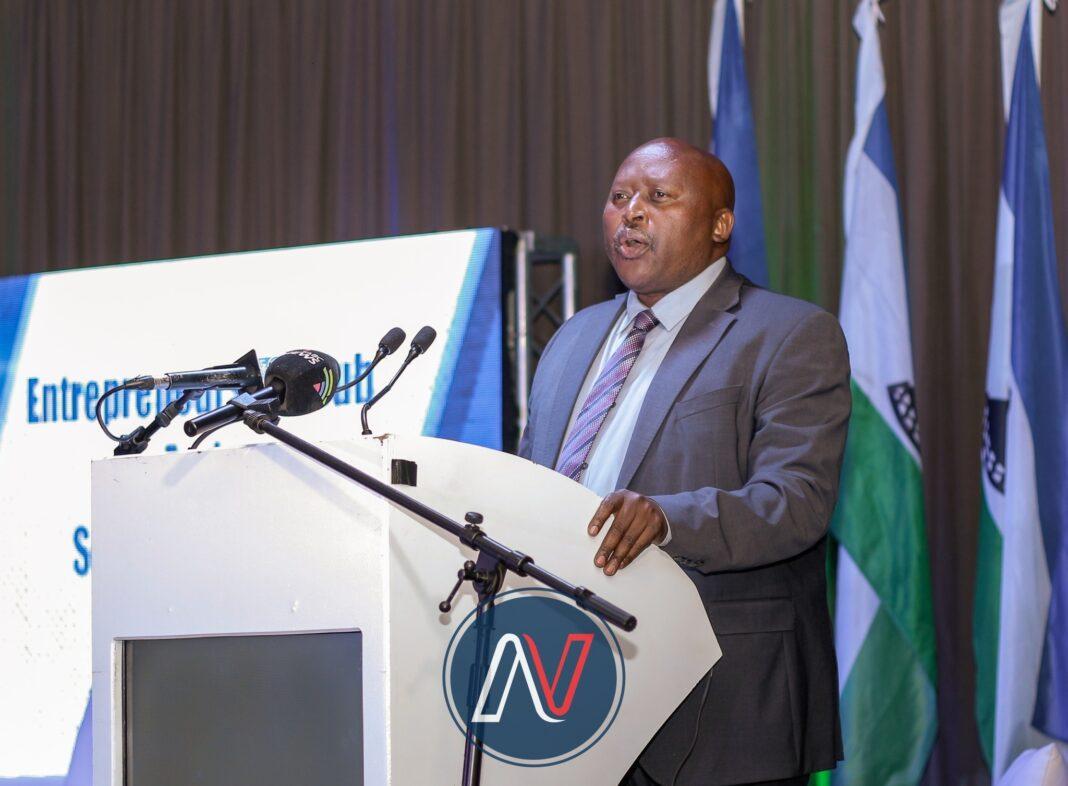
Speaking at the launch of the Call For Investors (CFI) targeting anchor investors and farmers interested in the Market Driven Irrigated Horticulture (MDIH) project opportunity by the Millennium Challenge Account – Lesotho II (MCA Lesotho II), Shelile stressed the urgency for Lesotho to explore sustainable job creation opportunities.
“Before COVID-19, around 52 thousand people were employed in the factories and now the numbers are standing below 25 thousand, and there is still more to follow,†he stated.
“We are working to reverse that, and it will be reversed, but we need to have an industry that is anchored on something that is actually authentic, and horticulture is the right way to go,†he added.
Shelile highlighted the need for diversification in job creation and emphasised the potential within agriculture to spawn various businesses, such as the production of juices and canned fruits and vegetables.
He underscored the significance of the compact within the national strategic development plan, particularly its focus on agriculture and the value chains it will create.
“The ministry is interested in the value chains that will be created through the project as well as the jobs which will be created. For me, the occasion is what I call better late than never,†he remarked.
Moreover, Shelile pointed out existing facilities in the country with the capacity to generate employment opportunities with adequate produce.
Notably, he mentioned the Lesotho Cannery, which has remained idle for an extended period and could be utilised for the production of juices and canned fruits.
In 2001, Lesotho signed on to an American trade deal: the African Growth and Opportunity Act (AGOA), which guaranteed duty-free U.S. imports of clothing manufactured in the country.
Chinese and Taiwanese companies built factories on the industrial edges of Maseru.
Although small compared with global garment-making giants Bangladesh and China, Lesotho’s clothing industry then became the country’s largest private employer, and more than 80 percent of its workers are women.
Textile products account for nearly half of Lesotho’s exports. Between 2001 and 2004, textile and apparel exports from Lesotho to the U.S. increased from $140 Million to $450 million – a 220 percent increase.
Industry effects are felt across Maseru. Shacks sprouted outside factories, selling goods. Taxis bring commuters from the city’s fringes. Landlords built cinder-block rooms with outdoor toilets.
Today, the sector is grappling with challenges, exacerbated by the Covid-19 pandemic.
In May this year, workers’ unions announced that 10,000 workers had lost their jobs since the beginning of the year, with more expected to be sent home, saying further layoffs were expected.
Six hundred workers were reportedly recently sent home by Textile Ltd (PTY), while it is alleged that Global Garment Textile Ltd (PTY) will lay off an undisclosed number of employees on October 2.
Commenting on the situation, May Rathakane, the Deputy Secretary General of the Independent Democratic Union of Lesotho (IDUL), called for government intervention to help the factories explore alternative markets.
Rathakane expressed hope that foreign buyers would resume placing orders and stressed that employers were compelled to reduce staff due to financial constraints arising from prolonged periods of inactivity.
Summary
- Speaking at the launch of the Call For Investors (CFI) targeting anchor investors and farmers interested in the Market Driven Irrigated Horticulture (MDIH) project opportunity by the Millennium Challenge Account – Lesotho II (MCA Lesotho II), Shelile stressed the urgency for Lesotho to explore sustainable job creation opportunities.
- “We are working to reverse that, and it will be reversed, but we need to have an industry that is anchored on something that is actually authentic, and horticulture is the right way to go,†he added.
- Shelile highlighted the need for diversification in job creation and emphasised the potential within agriculture to spawn various businesses, such as the production of juices and canned fruits and vegetables.

Welcome to Newsday Media – Your Trusted Source for News and Insights in Lesotho!
At Newsday Media, we are passionate about delivering accurate, timely, and engaging news and multimedia content to our diverse audience. Founded with the vision of revolutionizing the media landscape in Lesotho, we have grown into a leading hybrid media company that blends traditional journalism with innovative digital platforms.
Our mission is simple: to inform, inspire, and empower our readers by providing comprehensive coverage of local and global events, current affairs, and cultural happenings. Whether you’re looking for breaking news, in-depth analysis, or captivating storytelling, Newsday Media is your go-to destination for all things news-related.
With a dedicated team of journalists, editors, and multimedia experts, we are committed to upholding the highest standards of journalistic integrity and professionalism. We pride ourselves on delivering content that not only informs but also sparks conversation, fosters understanding, and drives positive change in our society.
From our flagship newspaper to our dynamic digital platforms, we offer a wide range of multimedia content to cater to the diverse interests and preferences of our audience. Whether you prefer to stay informed through print, online articles, videos, or podcasts, Newsday Media has something for everyone.
We believe in the power of storytelling to connect people, bridge divides, and inspire action. That’s why we’re dedicated to providing a platform for voices from all walks of life, championing diversity, inclusion, and authenticity in everything we do.
Thank you for visiting Newsday Media. We invite you to explore our website, engage with our content, and join us on our journey to inform, inspire, and empower our community. Together, let’s shape the future of media in Lesotho.