

Lesotho’s economy has lost momentum in recent months, with the country’s moderate economic rebound earlier this year proving short-lived, according to the latest Monetary Policy Committee (MPC) statement released by the Central Bank of Lesotho (CBL).
In simpler terms, weaker economic activity means businesses are producing and selling less than before, consumers are spending cautiously, and investment growth remains subdued. It also implies fewer opportunities for job creation and slower income growth if the trend persists.
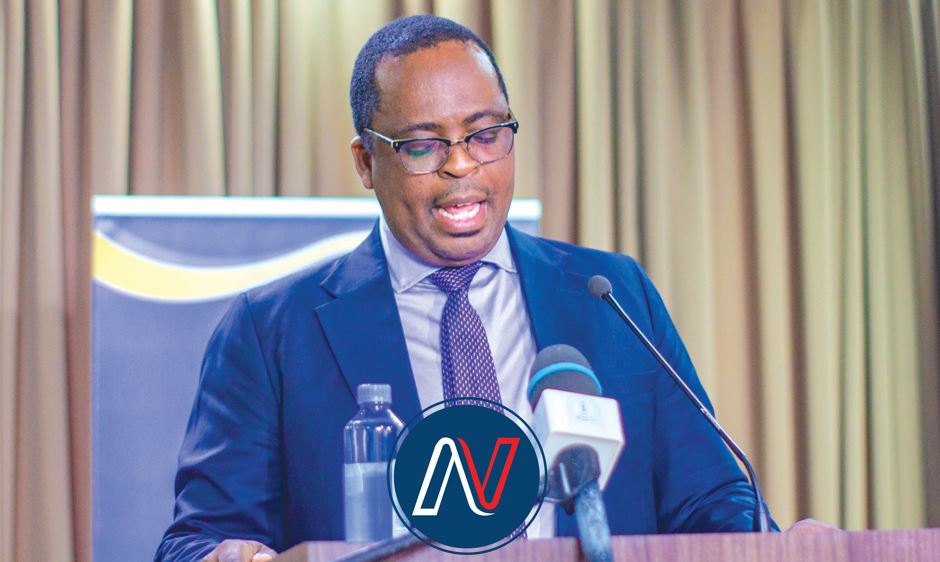
“Domestic economic activity has weakened. The moderate rebound recorded earlier in the year was not sustained, while recent indicators point to subdued demand in the transport and manufacturing subsectors,” CBL Governor Dr Maluke Letete said in the latest report.
His statement indicates that key sectors of the economy are struggling to maintain growth momentum, with transport and manufacturing experiencing weaker demand.
Letete further noted that private-sector credit growth remains subdued, indicating that households and businesses are borrowing cautiously despite relatively stable financial conditions.
Credit growth is often viewed as a useful gauge of economic confidence and business activity because firms typically borrow to finance expansion while consumers access credit to support spending.
“Private-sector credit growth remained subdued and is expected to stay broadly aligned with the medium-term outlook,” the statement said.
The CBL, however, expects the economy to continue growing modestly over the medium term, although much of that growth is projected to come from the services sector rather than broad-based expansion across industries.
“Over the medium term, growth is expected to remain modest and supported mainly by the services sector.”
The services sector includes industries such as telecommunications, financial services, retail trade, tourism and hospitality, which have increasingly become important pillars of Lesotho’s economic activity.
Despite weaker domestic growth, Lesotho’s external position remains relatively strong. The country’s net international reserves (NIR) stood at US$1,353 million as of July 16, 2026, equivalent to 5.4 months of import cover.
This level of reserves remains sufficient to protect the country’s currency arrangement with South Africa against external shocks, according to the CBL.
However, the apex bank expects reserves to decline gradually over the coming months as higher global oil prices increase the country’s import bill, with reserves projected to fall to US$1,217 million by March 2027.
Global economic developments continue to present significant risks to Lesotho’s economic outlook. Supply disruptions arising from conflict in the Middle East have pushed energy prices sharply higher, contributing to growing uncertainty over future inflation trends.
The MPC warned that downside risks to global growth include escalating geopolitical tensions, increased trade fragmentation and the possible development of a strong El Niño weather phenomenon.
These developments are particularly concerning for commodity-importing, low-income economies such as Lesotho, which are more vulnerable to rising fuel and food prices.
Domestically, inflation has begun to edge upwards, driven mainly by rising transport costs. Food price pressures, however, have remained relatively contained.
The central bank also revised its medium-term inflation outlook marginally upwards, warning that risks remain tilted to the upside.
Among the major risks identified are persistently higher oil prices, the possible withdrawal of fuel levy relief measures, weather-related disruptions affecting food supplies and secondary effects that could lead to higher wages and broader price increases across the economy.
Against this backdrop, the MPC decided to maintain the Central Bank of Lesotho’s policy rate at 6.75 per cent per annum.
“The Committee will continue to monitor evidence of second-round effects and stand ready to act decisively, as necessary, to safeguard the peg and preserve macroeconomic stability,” Letete concluded.
Summary
- The moderate rebound recorded earlier in the year was not sustained, while recent indicators point to subdued demand in the transport and manufacturing subsectors,” CBL Governor Dr Maluke Letete said in the latest report.
- The CBL, however, expects the economy to continue growing modestly over the medium term, although much of that growth is projected to come from the services sector rather than broad-based expansion across industries.
- The apex bank expects reserves to decline gradually over the coming months as higher global oil prices increase the country’s import bill, with reserves projected to fall to US$1,217 million by March 2027.

Senior journalist and communications professional with extensive experience in general news reporting, specializing in business and sports journalism. Skilled in public speaking, media relations, and strategic communication, with a proven ability to deliver accurate, engaging, and impactful stories.
A strong team player who thrives in collaborative environments and adapts effectively to diverse working conditions. Passionate about continuous learning, professional growth, and enhancing communication practices to meet evolving industry demands.