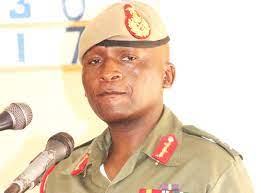

The defence in the marathon murder trial of Lieutenant General Maaparankoe Mahao has produced documentary evidence which appears to directly challenge the Crown’s contention that allegations of a mutiny plot within the Lesotho Defence Force (LDF) were fabricated to justify his killing.
The evidence was presented this week before the High Court by Corporal Marasi ’Moleli, one of the soldiers accused of murdering Mahao.
The Crown has maintained that Mahao was himself a suspect in an alleged mutiny plot and that the mutiny narrative was later used to cover up his killing.
Mahao was fatally shot by an LDF task team on June 25, 2015, during an operation dubbed “Operation Safe Lives”. He later died while receiving treatment at Makoanyane Military Hospital, according to evidence before the court.
The army has maintained that Mahao was shot after resisting arrest and fighting back. He is alleged to have drawn and pointed his pistol at Captain Tefo Hashatsi before Captain Haleo Makara shot him at Mokema. Hashatsi was the team leader of the operation.
But Crown counsel Advocates Rethabile Setlojane and Lehlohonolo Phooko have questioned the legality of the operation, including who authorised it.
Setlojane argued that the operation could not have been lawful because the soldiers tasked with arresting Mahao were all junior to him in rank.
Captain Hashatsi was the most senior of the eight soldiers who manned the operation, but was still junior to Mahao.
The Crown has also relied on the testimony of the current Army Commander, Lieutenant General Mojalefa Letsoela, who previously testified as State Witness No. 38.
Letsoela dismissed the existence of a mutiny plot, telling the court that there was no record of mutiny charges and, therefore, no prosecutable case before the Court Martial.
The Court Martial order
On Tuesday, however, the defence produced a document that appears to contradict that testimony.
Led in evidence by Defence Counsel Advocate Napo Mafaesa, ’Moleli presented correspondence endorsed by then Minister of Defence and National Security Tšeliso Mokhosi, directing that a Court Martial be convened to try members of the LDF on mutiny charges.
Newsday has seen a copy of the document, titled “Convening Order for the Court Martial”, dated August 13, 2015, less than two months after Mahao was killed.
In the order, Mokhosi stated: “I, Mr Tšeliso Mokhosi, the Honourable Minister of Defence and National Security, acting pursuant to the provisions of section 92(1) of the Lesotho Defence Force Act No.4 of 1996 read with Lesotho Defence Force (Delegation of Powers) Legal Notice No.131/2000 do hereby convene the Court Martial for purposes of trying, jointly, the stated and listed members of Lesotho Defence Force attached hereto on Annex ‘A’.”
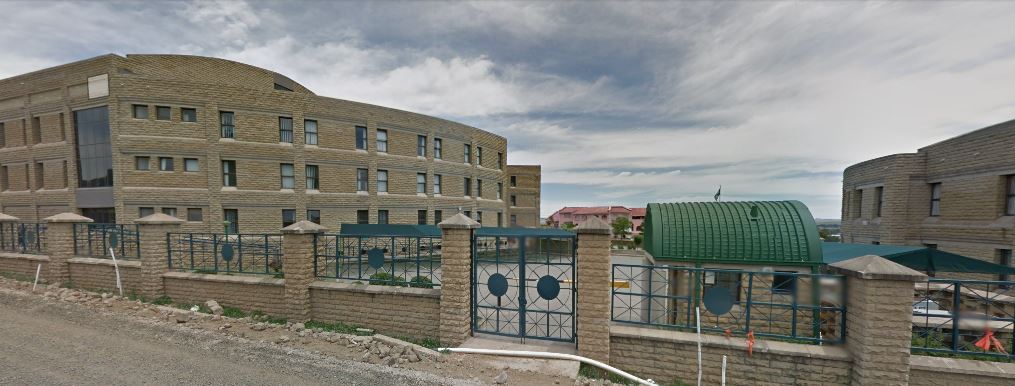
The Minister directed that the Court Martial sit at the structure near the Military Detention Centre, commonly known as Maximum Prison, in Maseru, or at another place as provided for under the Act.
The first charge listed in the order was: “Charge no.1 – Mutiny involving the use of violence or threat of use of violence contrary to section 48 (1) (a) of the Act, read with sections 48 (2) and 103 (1) of the Act.”
Mokhosi further provided for an alternative charge if the Court Martial could not establish that the alleged mutiny involved violence or the threat of violence.
That charge was: “Incitement to commit mutiny involving the use of violence or threat of use of violence contrary to section 48(1) (b) of the Act, read with sections 48(2) and 103(1) of the Act.”
If that charge also failed, the accused were to face a further alternative:
“Failure to use utmost endeavours to suppress a mutiny or failure to report that a mutiny is taking place or is intended contrary to section 49 of the Act.”
The order also appointed Major General Letsoela as President of the Court Martial, alongside Majors Ketseletso Mofoka, Kamoho Ramoriting, Tlelima Matia and ’Marethabile Kabane as members.
Mokhosi appointed Lieutenant Colonel Rapele Mphaki and Captains Noahana Lebona, Tieho Rankhone, Senatla Damane and Mosuoe Letsie as waiting members.
He also appointed Judge SPB Hancke as Judge Advocate.
The order stated: “After having consulted with the Attorney General in accordance with the Act. I hereby appoint Judge SPB Hancke as judge Advocate at the Court Martial.”
Advocate R. Surh was appointed prosecutor, assisted by Major Bulane Sechele and Second Lieutenants Moeketsi Mosehle and Mantšo Sello.
The Minister further directed that the record of the proceedings be transmitted to the confirming authority for confirmation of the findings and sentence if the accused were found guilty.
The document therefore places on record that, shortly after Mahao’s death, the government had formally initiated a Court Martial process involving alleged mutiny charges.
‘Mahao was a Brigadier when he died’
The defence also presented documentary evidence concerning Mahao’s military rank at the time of his death.
The evidence shows that Mahao had been removed as Commander of the LDF and reverted from Lieutenant General to Brigadier with effect from May 22, 2015, more than a month before he was killed.
Correspondence from then Government Secretary (GS) Moahloli Mphaka to Mahao stated: “I (Mphaka) am to inform you that, acting pursuant to section 21(b) and (e) of the Lesotho Defence Force Act No.4 of 1996, and in accordance with the advice of the Right Honourable the Prime Minister (Pakalitha Mosisili), His Majesty the King (Letsie III), has terminated your commission as Lieutenant General and removed you from office as Commander of the Lesotho Defence Force, effective from 22 May, 2015.”
Mphaka added: “Accordingly, you have reverted to your position as Brigadier in the Army.”
The communication was accompanied by Legal Notice No. 60 of 2015, which terminated Mahao’s appointment as LDF Commander and repealed the 2014 notice that had promoted him from Brigadier to Lieutenant General and appointed him Army Commander.
“I, King Letsie III, pursuant to section 21 (b) and (e)of the Lesotho Defence Force Act No.4 of 1996, and acting in accordance with the advice of the Prime Minister (Pakalitha Mosisili) terminate the appointment of Lieutenant General Maaparankoe Mahao, as Commander of Lesotho Defence Force with effect from 22 May, 2015.
The Lesotho Defence Force (Appointment of Commander) Notice 2014 is repealed,” the notice stipulated. It was dated May 21, 2015.
The rank issue is potentially significant because the soldiers who allegedly went to arrest Mahao were junior to him, a point already raised by the Crown in challenging the legality of the operation.
‘Today is the day we are going to arrest Brigadier Mahao’
Giving evidence about the events of June 25, ’Moleli said he reported for duty at Ratjomose Barracks at about 6am.
At around 9am, he said, Captain Hashatsi arrived and told him and his colleagues: “Today, is the day we are going to arrest Brigadier Mahao.”
According to ’Moleli, Hashatsi was briefing the soldiers who formed part of the task team established to hunt down suspected mutineers and arrest them.
The team included Second Lieutenant Litekanyo Nyakane, Captain Haleo Makara, Sergeant Motsamai Fako and Corporals Motšoane Machai, Mohlalefi Seitlheko and Tšitso Ramoholi, all of whom are accused in the murder trial. Private Halahala was also present.
’Moleli said Hashatsi divided the soldiers into four teams and assigned him and Halahala to the fourth team.
“He divided us into four teams. He said Brigadier Mahao was going to be arrested at his farm at Mokema. I was in the fourth team with Private Halahala, and our role as the fourth team, Captain Hashatsi ordered, was surveillance. We were tasked with the role of providing the general team with real-time surveillance on Mahao, thus me and Private Halahala,” ’Moleli testified.
He said they travelled to Mokema with Hashatsi and Nyakane and positioned themselves where they could observe movements at Mahao’s home and farm.
Between 11am and noon, they noticed a white truck which they believed belonged to Mahao arriving at the farm.
They later saw Mahao leave the farm in the truck between 2pm and 3pm and informed Hashatsi.
Hashatsi instructed them to hurry to a nearby tarred road, where they were expected to join him and Nyakane and follow Mahao.
Before they reached the rendezvous point, Hashatsi called again, telling them to hurry.
’Moleli testified that Hashatsi subsequently called back in an agitated state. “Hee Banna! Masepa a se a etsahetse,” (Guys! Shit has happened.)
’Moleli said Hashatsi then told them that Mahao had been shot after resisting arrest and fighting back.
The court has previously heard that Mahao allegedly pointed his pistol at Hashatsi during a struggle as the soldiers attempted to arrest him, after which Sergeant Makara intervened and shot him in what the court heard was a “double-tap” army-style shooting.
The trial continues before Justice Charles Hungwe in the High Court.
Summary
- The defence in the marathon murder trial of Lieutenant General Maaparankoe Mahao has produced documentary evidence which appears to directly challenge the Crown’s contention that allegations of a mutiny plot within the Lesotho Defence Force (LDF) were fabricated to justify his killing.
- The Minister directed that the Court Martial sit at the structure near the Military Detention Centre, commonly known as Maximum Prison, in Maseru, or at another place as provided for under the Act.
- “Failure to use utmost endeavours to suppress a mutiny or failure to report that a mutiny is taking place or is intended contrary to section 49 of the Act.
I am a journalist based in Maseru, Lesotho, renowned for investigative reporting. Over the years, my work has been published both locally and internationally, including in South Africa through the Amabhungane Centre for Investigative Journalism and the Daily Maverick, among other publications.
In Lesotho, I have served as a senior reporter for several leading weekly newspapers, including the Lesotho Times, Public Eye, and Sunday Express. My reporting has focused on uncovering issues of public interest, promoting accountability, and giving voice to underreported stories.
In 2016, I co-founded the MNN Centre for Investigative Journalism in Maseru, an initiative dedicated to strengthening investigative journalism and fostering a culture of transparency and public-interest reporting in Lesotho.